

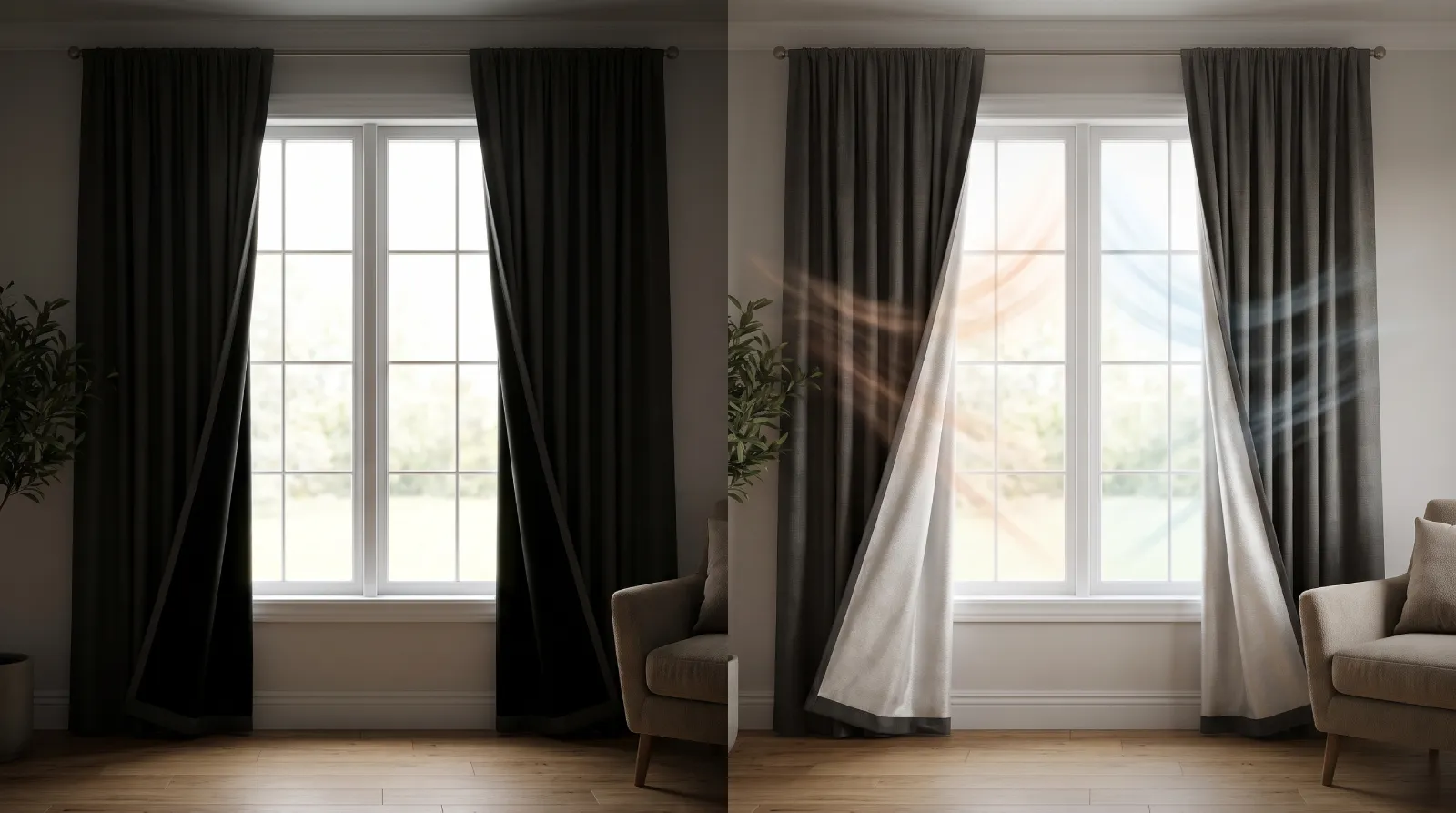
The main difference in blackout vs thermal curtain lining is the job each label describes. Blackout refers to limiting light passing through the fabric. Thermal refers to a lining’s intended contribution to controlling heat transfer. A product may be designed to do both, but the words should not be treated as interchangeable.
The right choice also depends on how the drapery is made and installed. A fabric that blocks light through its surface can still allow light around the edges. A lining marketed for comfort cannot correct every problem associated with a drafty window or an unsuitable room layout.
For Louisville homeowners planning custom drapery, start with the result you want in the room. Then evaluate the fabric, lining, hardware, and installation together.
Identify the Problem Before Choosing the Lining
A lining decision becomes easier when the brief describes a specific need. “I want better curtains” leaves many questions unanswered.
A bedroom may need less early-morning light. A west-facing living room may need glare control while retaining a pleasant daytime appearance. A dining room may need a more substantial drape rather than a darker interior.
Write down what matters most and what you are willing to trade. More weight can change how panels stack. A darker room may require more deliberate overlap. A lining chosen for one purpose may alter the appearance of a sheer or lightweight face fabric.
Bring photographs of the room and describe when the problem occurs. The time of day, window orientation, existing hardware, and intended use of the room all help frame a useful consultation.
Understand What Blackout Lining Does
Blackout drapery lining is intended to limit light passing through the lined fabric assembly. The relevant product specification matters more than a general label on a display.
Ask to see the actual lining behind the face fabric you are considering. Look at the combination under realistic light, not just as two small samples lying on a table.
The lining may change the color, opacity, or character of the face fabric. A pale fabric can look different when backed, and a lightweight fabric may hang differently with an added layer.
Manufacturer education, such as the James Dunlop lining guide, explains differences among lining constructions. Use that information to ask product-specific questions rather than assuming every item called blackout performs identically.
Understand What Thermal Lining Does
Thermal curtain lining is selected with temperature-related comfort in mind. However, the performance of a finished window treatment depends on more than the material name.
The size of the covered area, fit around the opening, placement of the panels, and actual room conditions affect the result. A lining does not establish a household energy-savings figure on its own.
Ask which documented characteristics support the product’s thermal description. If a claim is based on testing, find out what was tested and whether the conditions resemble the proposed installation.
Be cautious about transferring a percentage from a different treatment, window type, or room into your own project. A useful recommendation explains the intended role of the lining and acknowledges what it cannot resolve, including unrelated window defects or building-envelope problems.
Louisville Blinds & Drapery’s energy-efficient window treatment information is a useful companion when discussing comfort goals for the whole window.
Lawrence Berkeley National Laboratory’s residential window attachment research places shades and other attachments in the context of thermal comfort, daylight, glare, and privacy. That broader view helps explain why a lining label alone cannot describe the performance of the whole installation.
Recognize That One Product Can Have Several Functions
Blackout and thermal are not opposing material categories in every collection. Some coated linings are marketed for both light control and thermal properties.
That overlap makes the product discussion more important. Ask what the specific lining is designed to do, how it should be cared for, and which face fabrics are suitable.
Also ask whether standard lining or interlining could better serve the room. A decorative panel that needs improved body may not require the same construction as a bedroom treatment intended to reduce early light.
Avoid choosing the most specialized label simply because it sounds more substantial. Select the assembly that fits the room’s use, appearance, maintenance expectations, and available hardware. The best brief distinguishes the result you need from the material name you first encountered online.
Distinguish Lining From Interlining
Lining generally forms the back layer of the drapery. Interlining is an additional layer within the construction, commonly discussed when a project needs a particular body or appearance.
The exact materials and construction vary, so ask the workroom to show a sample rather than relying on terminology alone.
A small cross-section or sample panel can clarify what is being added. You can compare how the layers affect thickness, folds, flexibility, and the way the panel falls.
More layers are not automatically appropriate. Added weight can affect hardware, handling, cleaning, and the amount of space needed when curtains are open. A practical workroom discussion considers the finished treatment as an assembly, including the supports that carry it.
Look Beyond the Fabric When Darkness Matters
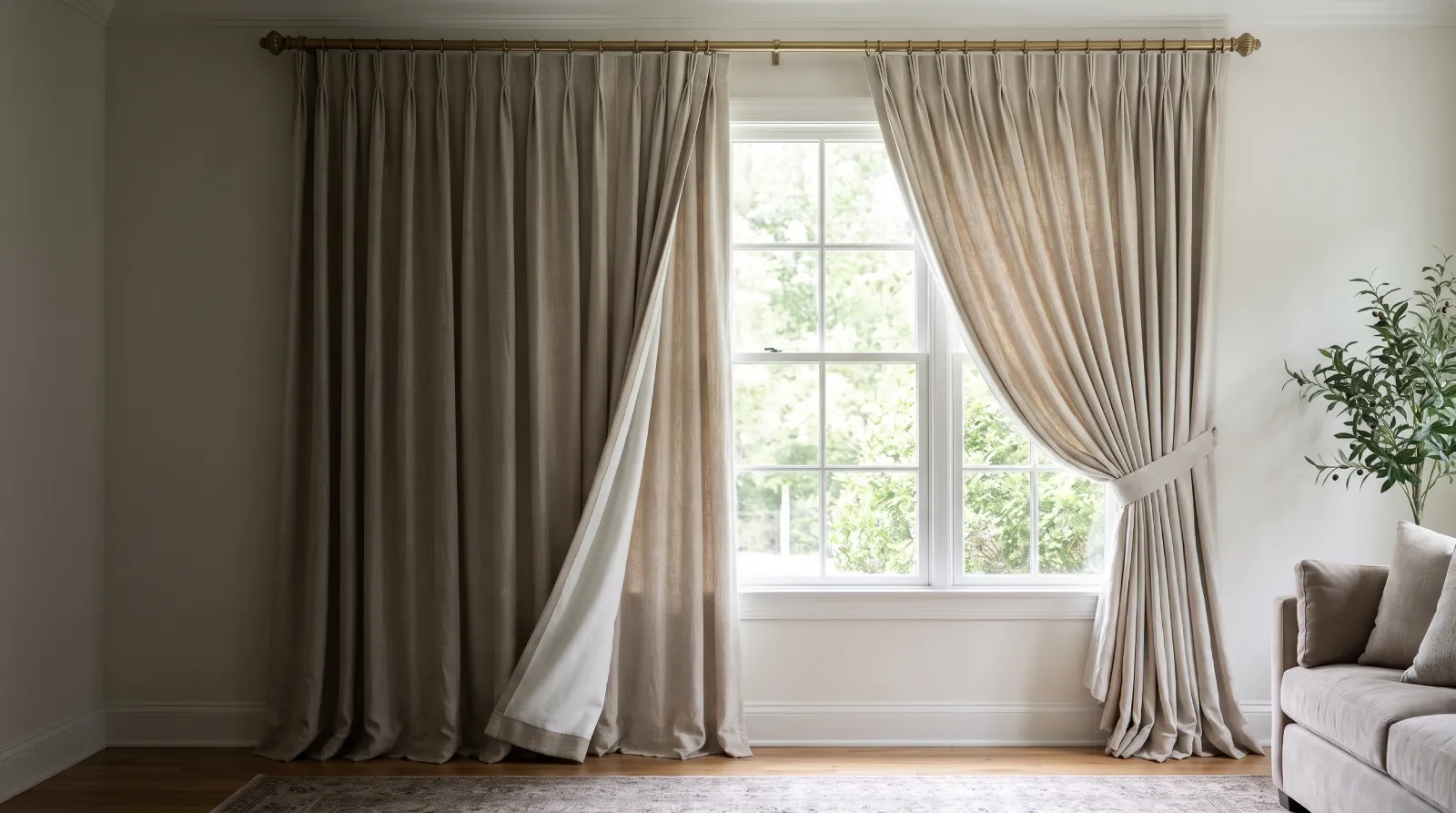
Light can enter around the sides, top, bottom, and meeting edges of drapery. That is why a blackout lining sample does not guarantee a completely dark bedroom.
Discuss the position and extent of the treatment relative to the opening. Hardware, returns, overlap, and nearby obstacles all influence the design.
For example, a radiator, deep sill, door, or limited wall space may restrict where a panel can sit. Those conditions should be measured and considered before a darkness promise is made.
Ask how the proposed treatment manages both light through the fabric and light around it. If a layered solution is suggested, understand which layer handles which function and how the layers will be operated during the day and at night.
Consider How the Drapery Will Open and Stack
A lining affects more than a closed curtain. It can change the weight and volume of the panels when they are drawn aside.
Check whether there is enough space for the open stack without covering more glass than you intend. Consider doors, furniture, and the direction in which people move through the room.
The operating method matters too. A heavier assembly may require a different hardware approach from a lightweight decorative panel. Ask the designer or installer to assess the proposed track or rod rather than assuming existing supports are suitable.
A sample panel can be useful when the visual result is important. Looking at folds and movement in person gives more information than comparing fabric descriptions online.
Evaluate Existing Curtains Before Adding a New Layer
It may be possible to add or change a lining, but the face fabric, heading, construction, and condition need review first.
A curtain that is faded, fragile, distorted, or too small for the intended coverage may not be a good candidate for modification. Existing cleaning requirements also need to work with the proposed lining.
Ask whether the workroom is evaluating a sewn-in alteration, a separate liner, or an entirely new treatment. Those options can have different effects on appearance, handling, and the hardware.
Bring the existing panels or arrange the assessment recommended by the business. Measurements and photographs are useful, but they may not reveal every construction detail needed to decide whether an alteration is practical.
Compare Samples Under Conditions That Matter
A fair comparison uses the same face fabric and similar viewing conditions. Otherwise, a difference caused by the decorative fabric can be mistaken for a lining difference.
Ask to compare the candidate linings together. Observe transmitted light, the appearance from the room, the appearance from outside where relevant, and the way the assembly hangs.
Do not turn an informal sample demonstration into an unsupported performance claim. A showroom observation can help you choose, but it is not the same as a controlled test establishing energy savings or total room darkness.
Record the product names and codes. That prevents an approved sample from being confused with a similar-looking material when the order is prepared.
Include Care and Serviceability in the Decision
Ask how the complete treatment should be cleaned and what conditions could affect its appearance over time. The face fabric, lining, trims, and hardware may not share the same care requirements.
Consider who will open, close, remove, and maintain the drapery. A beautiful but difficult-to-handle treatment may not suit a room used frequently by several family members.
Also discuss access to the window, handles, and any nearby controls. A treatment should remain usable when the window or room needs routine attention.
Keep the approved specifications with the order. Product identity, construction details, and care instructions are more useful for future service than a description such as “the thick lining we chose.”
Choose Around the Whole Window Treatment
When comparing blackout vs thermal curtain lining, bring the discussion back to your priorities: light, comfort, appearance, operation, and care. One label cannot answer all five.
Louisville Blinds & Drapery offers custom drapery and related window treatments and describes a drapery workroom as part of its business. That makes a sample-based conversation relevant for a Louisville home where a standard ready-made panel is not meeting the room’s needs.
Prepare a simple room brief and let the measurements and actual materials guide the choice. You will be better placed to approve a treatment when you understand what each layer contributes and where installation details matter.
Frequently Asked Questions
Are blackout and thermal curtain linings the same?
Not necessarily. Blackout describes light-control intent, while thermal describes temperature-related performance intent. Some products are designed for both. Ask about the exact material and finished assembly rather than assuming that either label guarantees the other function or a particular result in every room.
Can blackout lining make a bedroom completely dark?
It can limit light passing through the fabric, but room darkness also depends on gaps, overlap, hardware, and coverage around the opening. Ask how the whole treatment manages edge light. A blackout sample alone cannot establish that an installed room will have no light entering anywhere.
Will thermal lining fix a drafty window?
It should not be treated as a repair for a defective window or an unrelated building problem. Discuss the comfort goal and have actual drafts or water entry assessed appropriately. The lining’s role is part of the window-treatment design, with performance depending on the specific product and installation.
Can I add lining to my existing curtains?
Possibly, but the fabric condition, construction, size, heading, care requirements, and hardware need review. A workroom can explain whether alteration, a separate liner, or replacement is more practical. Do not order a heavy lining before confirming that the existing treatment and supports can accommodate the change.
What should I bring to a drapery consultation?
Bring room photographs, approximate dimensions, your main light or comfort concern, existing hardware information, and any panels you want assessed. Explain how you use the room and when the problem occurs. Product samples and verified measurements can then turn those priorities into a more specific treatment plan.
Compare the Options for Your Louisville Home
Explore drapery with Louisville Blinds & Drapery or explore consultation options to discuss your room, fabric preferences, and lining needs. Start with the outcome you want, then compare the materials and installation details that can support it.
